





How to choose the right jewelry size? A complete guide to accurately measuring rings, necklaces, and bracelets A lot of people run into the same problem when buying jewelry: the style looks great, but it doesn't fit once you put it on
A lot of people run into the same problem when buying jewelry: the design looks great, but it doesn't fit right when worn. Rings are too tight and pinch your fingers or too loose and slip around; necklaces are awkwardly long and drag down your style; bracelets get caught in your fingers and slip off easily.
Actually, half of the luxury of jewelry comes from its design and craftsmanship, and half from its fit. Choosing the right size can double its elegance, comfort, and styling impact.
This most comprehensive jewelry size guide teaches you how to accurately measure ring, necklace, and bracelet sizes at home without any professional tools, so you can say goodbye to the hassle of picking the wrong size, returning or exchanging items, or wearing things that don't fit properly.
I. How do I measure my ring size? A zero-error measurement method
A lot of people get ring sizes wrong because they don't take into account the physiological changes in the fingers.
People's finger sizes aren't fixed and can change slightly depending on factors like temperature, daily routine, physical condition, and time of day: in the early morning right after waking up, blood circulation is slower and fingers tend to be thinner; during the day after activity, drinking water, or working, fingers may swell slightly in the evening, which best reflects the typical daily wear state. Additionally, in summer when temperatures are high, fingers can get slightly puffy, while in winter when temperatures are low, fingers tend to be more slender.
So the most standard and accurate measurement time is in the evening at room temperature. Rings selected based on this data will fit well for daily wear throughout the year without the awkward situation of being loose in winter and tight in summer.
1. Thin thread/paper strip method (most recommended for beginners).
This is the go-to measurement method for beginners looking to avoid mistakes. It's easy to use and provides accurate results without needing any professional measuring tools. All you need are three common household items: a thin string, a piece of thin paper, and a ruler. The step-by-step instructions are clear and easy to follow:
- Wound the thin thread smoothly around the widest part at the base of the finger you're wearing it on
- Fit snugly to the skin but not too tight, maintain a natural elasticity
- Mark the overlapping areas with a pen
- Pull the straight bar and measure the total circumference
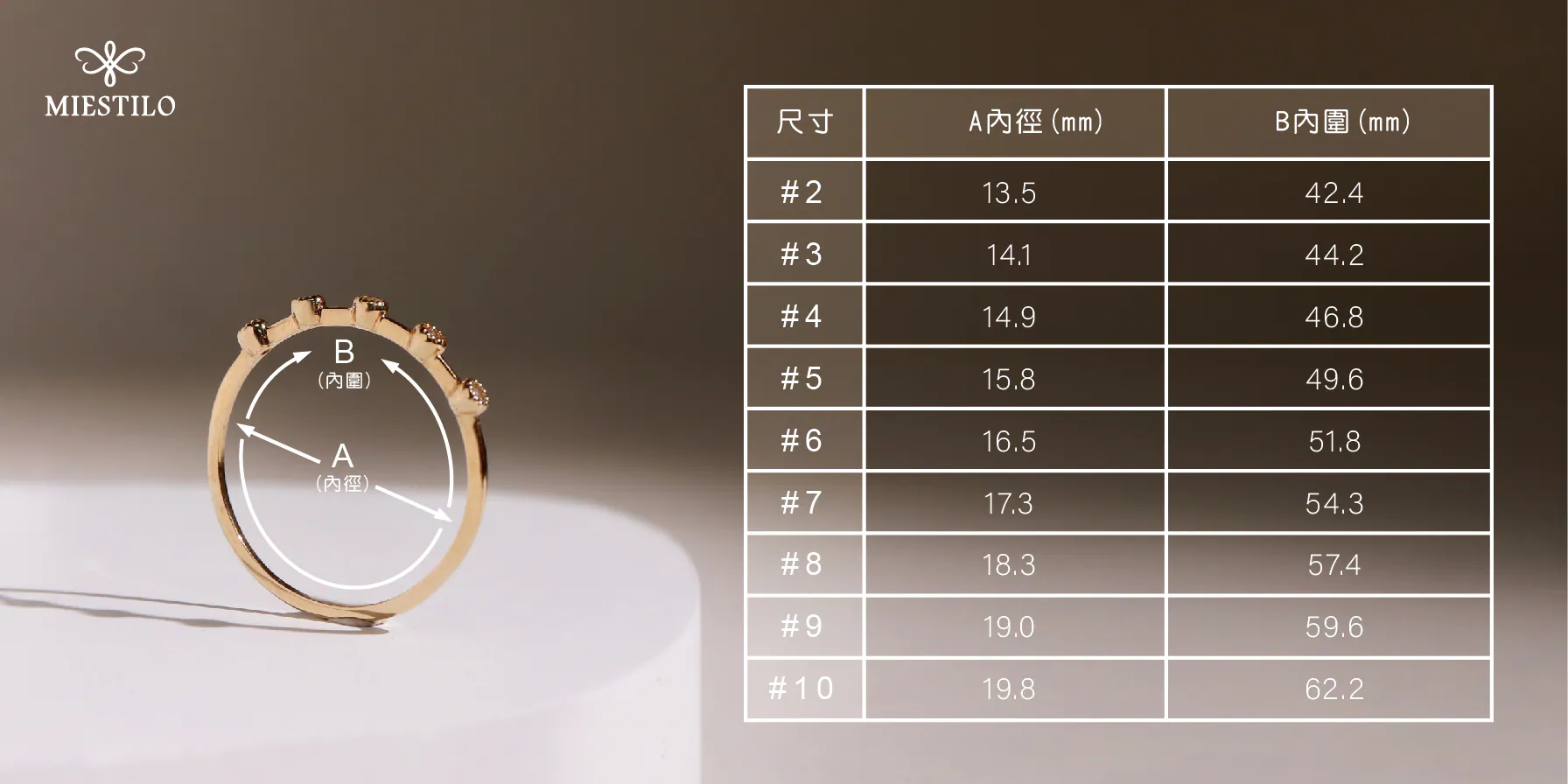
- Just check the size chart to find the right ring size for you
2. Old ring comparison method (fastest and most accurate)
If you have an old ring at home that fits comfortably and is the right size, you can use the quick comparison method - it's time-saving, labor-saving, and extremely accurate.
Place the old ring flat on a clean surface, making sure it's level without any tilt. Then measure the inner diameter of the ring (be careful not to measure the outer diameter to avoid inaccurate readings). Once you've recorded the exact measurement, refer to the brand's size chart to quickly determine your exact ring size.
This method is especially suitable for people who don't want to measure repeatedly and are looking for efficiency and accuracy, while also avoiding the operational errors that come with manual winding.
Key tips to avoid mistakes when buying a ring (must-read for beginners)
- Priority for people with thicker joints: Many people have thin fingertips but thicker knuckles. For this group, the measurement should be based on the circumference of the joint, not the size of the fingertip. Otherwise, the jewelry won't fit properly or will be difficult to put on and take off, which seriously affects daily wear.
- Width difference in ring sizes: Wider rings have a larger contact surface, providing a tighter fit on the finger, so they can feel tighter and more uncomfortable compared to narrower rings. When choosing a ring with a width of 3mm or more, it's recommended to go up half a size from your standard size for a looser and more comfortable fit.
- Seasonal fitting tips: In winter, fingers tend to be slimmer. When measuring and purchasing, it's recommended to choose a size up to perfectly accommodate the slightly swollen fingers in summer and avoid rings feeling tight and uncomfortable.
Wearing style compatibility: If you prefer a snug, minimalist and elegant fit, choose the standard size; if you like a looser, more casual feel with slight movement, opt for the larger half size for everyday activities like lifting objects or working. Here's the ring size chart
Ⅱ. How do I choose the right necklace length? Different lengths suit different personalities
A necklace is the key accessory that adds sophistication to an outfit and enhances facial contours. It's also the piece of jewelry that has the biggest impact on overall style. A lot of people's outfits look bland and bulky, not because of their style, but because they've picked the wrong length of necklace. Different necklace lengths work perfectly with different face shapes, neck sizes, styles, and seasons. Choosing the right length can help hide short necks, round faces, and square faces' shortcomings, elongate the neckline, and create an illusion of a Swan neck. Choosing the wrong length, on the other hand, can make you look shorter and exaggerate facial flaws, making the whole look messy and lacking in texture.
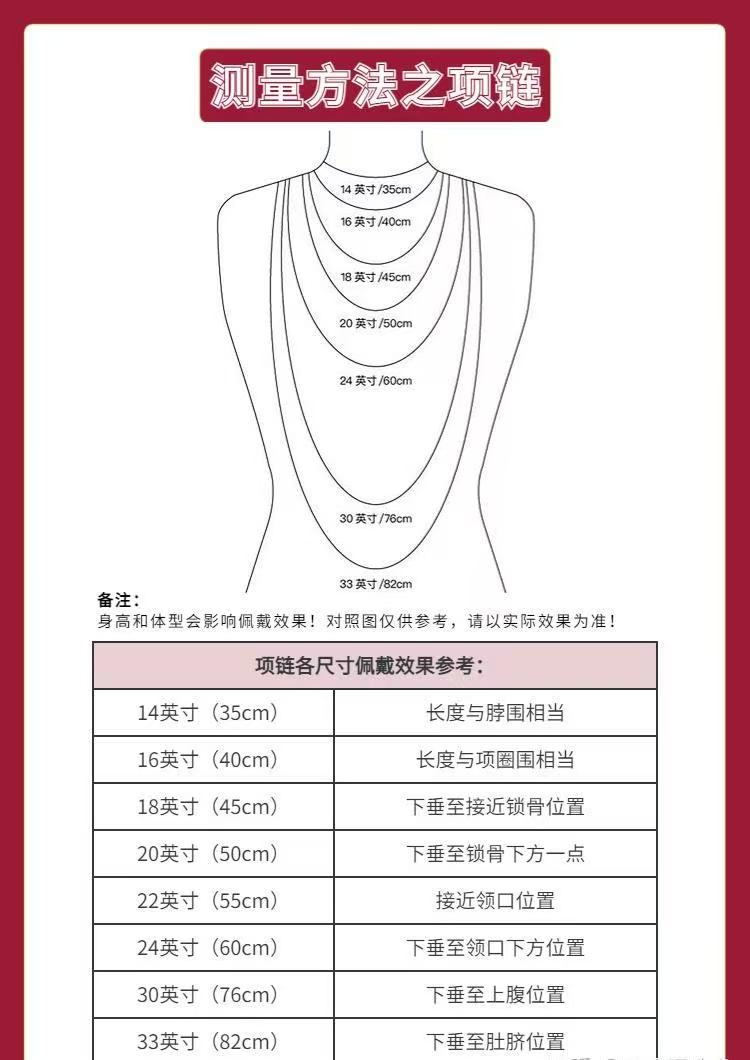
Universal Necklace Length Guide
- 35–40cm Choker Necklace: A short, close-fitting design that sits right above or at the level of the collarbone. Extremely delicate and petite, it perfectly accentuates the collarbone lines while minimizing any bulkiness on the neck. Perfect for everyday commuting, dates, or casual wear – its simple yet gentle style makes it a versatile and sophisticated choice. Ideal for petite people with shorter necks or round faces, it effortlessly creates a light and airy look.
- 40–45cm classic versatile length: Widely recognized as the perfect universal size that works with any height, face shape, or style of outfit. Fits all necklines—round, square, V-neck, high-neck, etc. Perfect for everyday work, shopping, or gifting. Suitable for all seasons and doesn't draw attention or stand out—just understated and stylish. It's the most versatile necklace length that's least likely to go unused.
- 50–60cm medium-long necklace: The perfect length, with a relaxed and casual vibe that instantly adds sophistication. It's great for layering and can be paired with a shorter choker for an extra dimension. Perfect for autumn and winter - throw it on over sweaters, knits, high-necked layers, or under suits to fill in gaps in your outfit and avoid looking bulky or monotonous. It instantly boosts the overall look.
- Long sweater chains over 70cm: These extra-long styles have incredible vertical stretch, effectively lengthening the neck and body proportion. They can help correct issues with round faces, square faces, or wide chins, giving a slimming effect. Great for pairing with loose coats, trench coats, hoodies, etc. in autumn and winter, and can also be layered for a more sophisticated and unique look with a rich atmosphere.
Face shape & body type fitting tips
- Round face shape: The face has rounded lines with plenty of space between features. Avoid extremely short necklaces under 35-40cm in length and opt for medium to long or long necklaces over 45cm instead. Use vertical lines to elongate the face proportion, soften the roundness, and create a slender and refined facial contour.
- Long face shape: The vertical proportion of the face is longer. Avoid overly long sweater chains that can make the face look even more narrow. Opt for short choker chains around 40cm instead to add visual depth to the neck and effectively soften the elongated look, making the face proportions more balanced.
- People with shorter necks/thick necks: Avoid short chokers that cling to the neck. Opt for pendant chains that hang at least 40cm off the skin to create more space around the neck, visually lengthen the line of the neck, and effortlessly achieve a swan-neck effect. It looks clean, crisp, and doesn't drag.
III. How to choose the right bracelet size? It shouldn't get stuck or slip off
Bracelets and wristbands are key accessories that add charm to your wrists and enhance your elegance. The right fit directly determines the wearing experience and how attractive they look.
Many people only look at the style when buying bracelets and overlook the issue of sizing, which leads to all sorts of wearing problems: bracelets that are too small can squeeze tightly around the wrist, hindering blood circulation, and over time can cause wrist soreness and redness; bracelets and chains that are too large will keep shaking and bumping around during daily activities like lifting hands, working, or exercising. This not only easily wears down the jewelry plating and scratches the metal surface but also makes them very likely to slip off and get lost, causing unnecessary losses. Therefore, accurately measuring your wrist size and choosing the right tightness based on the style is of utmost importance when purchasing bracelets or chains.
Accurate measurement method
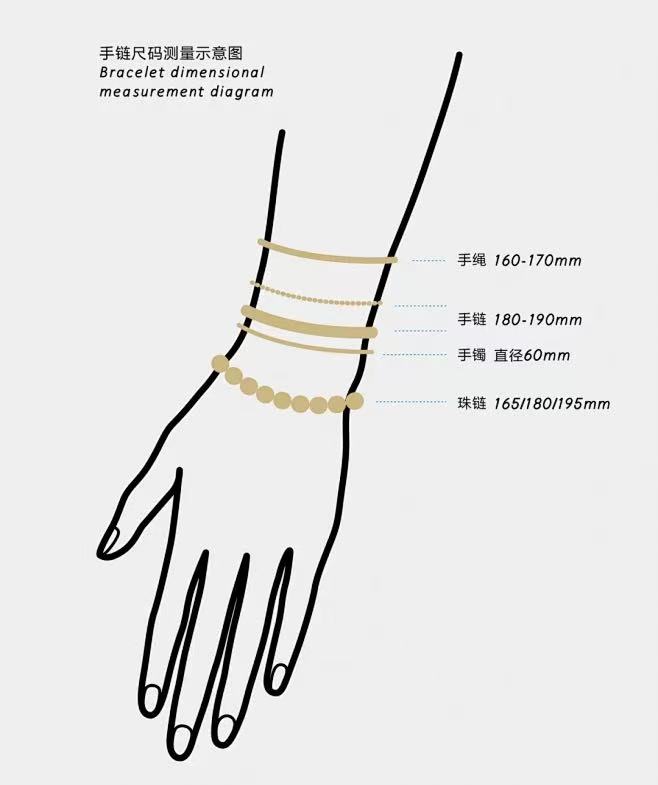
- Find the right measurement spot: When measuring your wrist size, you don't need to measure the widest part - focus on the thinnest part of your wrist, right at the joint. This is the key measurement that determines whether the bracelet will fit comfortably.
- Accurate measurement: Use a flexible tape measure or thin, inelastic string to wrap around your wrist smoothly once, making sure it fits snugly against your skin without squeezing. Record the exact circumference of your wrist.
- Reserve some adjustment room: Add extra size based on personal wearing preferences for a snug, secure fit without any movement - add 1cm to the net circumference. If you prefer a looser, more casual feel with some movement, add 2cm to the net circumference for all-day comfort.
Exclusive styling tips
- Circular bracelets: They're the most versatile and don't pick on different hand shapes. Just choose according to the standard measurements, and the regular tightness fits most people - they're easy to wear and go with everything in your daily life.
- Guifei Oval Bracelet: Ergonomically designed to fit the wrist perfectly, it looks more stylish and makes the wrist look slimmer. However, it has a smaller opening and is harder to put on and take off. Newbies are advised to size up one size from regular round bracelets to avoid getting it stuck or struggling to wear it.
- Differences between thin and thick bracelets: Thin chain bracelets are lightweight and small, so you can choose a size that fits snugly - they're delicate without being bulky. Wide or chunky bracelets have a larger surface area and can be uncomfortable to wear on the wrist, so it's best to leave some extra room for a more comfortable fit that won't restrict your movement.
IV. General sizing rules you must know when buying jewelry
Many jewelry sizing issues aren't due to measurement errors, but rather an overlook of the basic principles behind wearing jewelry. Master these five universal sizing rules, and whether you're buying rings, necklaces, or bracelets for yourself or as gifts, you can almost guarantee zero mistakes and say goodbye to sizing disasters:
- Take the average of multiple measurements: Single measurements can be prone to errors, so it's recommended to measure 2-3 times at different times, record the values, and then calculate the average for the most accurate dimension.
- Metal jewelry should be loose rather than tight: The vast majority of metal jewelry has no elasticity and can't stretch. A too-tight fit will press against the skin over time, affecting the wearing experience. A slightly loose fit works well with any body type and is more comfortable and durable for long-term wear.
- The best gift option for adjustable styles: When giving gifts to relatives, friends, or loved ones and not knowing their exact size, go with adjustable rings, extendable chain necklaces, or open bracelets. They fit all sizes with zero risk of returning or exchanging them.
- Avoid extreme measurement conditions: Swelling in the morning, after exercise, or in environments with extreme temperature differences can cause variations in hand and foot sizes. It's best to measure when the temperature is normal and your body is stable for more accurate results.
- Tips for people with slightly plump hands: Those with thicker wrists and fingers should avoid narrow, tight designs. Choose loose or adjustable styles instead to look slimmer and more refined, without looking bulky.
Conclusion: The right size makes jewelry speak to you better
There are countless beautifully crafted pieces of jewelry on the market, but the ones that truly enhance your style and can be worn comfortably over time are always those that fit properly. Many people focus solely on niche designs and expensive materials, but they overlook the most basic and crucial detail: fit. The size of jewelry isn't just about a simple number—it's about how it fits your body, suits your daily life, and adds quality to your outfit. It's a direct reflection of your refined lifestyle and aesthetic taste.
Whether for everyday commuting, casual dates, or holiday outings for personal wear, or as a thoughtful gift for birthdays, anniversaries, or special occasions, choosing the right size is crucial to ensure that every piece of meticulously crafted jewelry fits perfectly, enhances your natural beauty, and showcases your unique elegance and sophistication. Master this comprehensive size guide and effortlessly unlock refined looks, allowing every piece of jewelry to maximize its beauty and value


